
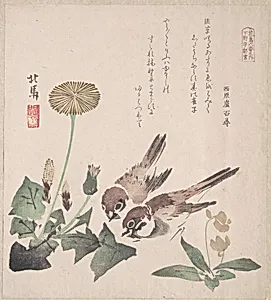
摺物帖 『春雨集』 『花鳥六番之内 下野宇都宮』 タンポポに雀|Spring Rain Collection (Harusame shū), vol. 3: Sparrows and Dandelions
ca. 1820
Medium
Privately published woodblock prints (surimono) mounted in an album; ink and color on paper
Dimensions
8 3/8 x 7 1/2 in. (21.3 x 19.1 cm)
Classification
Prints
Culture & Period
Japan · Edo period (1615–1868)
Department
Asian Art
Museum
Metropolitan Museum of Art, New York, NY
Credit
H. O. Havemeyer Collection, Bequest of Mrs. H. O. Havemeyer, 1929
Accession Number
JP2364
Rights
Public Domain
Tags
Art Historical Context
This delicate woodblock print, *Sparrows and Dandelions* the *Spring Rain Collection (Harusame shū)*, volume 3, is a gem by Teisai Hokuba, created around 1820 during Japan's Edo period (1615–1868). Part of a privately published surimono album, it captures sparrows perched amid dandelions, evoking the gentle renewal of spring. Mounted together, these intimate prints (8 3/8 x 7 1/2 in.) showcase Hokuba's skill in ink and color on paper, blending naturalistic motifs of birds and plants in a serene composition. Surimono, meaning "printed things," were luxurious, limited-edition woodblock prints commissioned for special occasions like New Year's greetings or poetry gatherings among Japan's literati. Unlike mass-produced ukiyo-e, they featured fine details, subtle colors, and often embossed effects, making them cherished keepsakes. Hokuba's work reflects Edo-era fascination with nature's fleeting beauty, drawing viewers into a poetic world where everyday flora and fauna symbolize transience. Housed in the Metropolitan Museum of Art's Asian Art Department from the H. O. Havemeyer Collection, this piece highlights Japan's masterful printmaking tradition. Imagine flipping through the album, each page a whisper of spring rain—perfect for savoring the harmony of art and season.
About the Artist
Teisai Hokuba · 1771–1844
Teisai Hokuba (1771–1844) was a Japanese artist of the Edo period who worked in the tradition of ukiyo-e, the celebrated school of woodblock prints and paintings that depicted the floating world of urban pleasure, theater, landscape, and daily life. A devoted pupil of Katsushika Hokusai — one of the towering figures in the history of Japanese art — Hokuba adopted the prefix of his master's name as...