
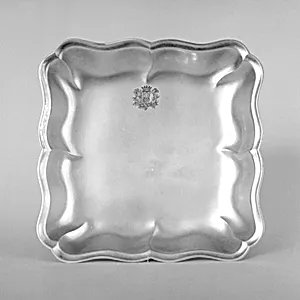
Square dish
1757–58
Medium
Silver
Dimensions
Width: 10 in. (25.4 cm)
Classification
Metalwork-Silver
Culture
German, Augsburg
Department
European Sculpture and Decorative Arts
Museum
Metropolitan Museum of Art, New York, NY
Credit
The Lesley and Emma Sheafer Collection, Bequest of Emma A. Sheafer, 1973
Accession Number
1974.356.777
Rights
Public Domain
Tags
Art Historical Context
This elegant square silver dish, crafted by Abrahamentwett IV insburg, Germany, between 1757 and 1758, exemplifies the city's renowned tradition of masterful metalwork. Measuring 10 inches across, the dish stands out for its unconventional square form, which departs from typical circular designs and suggests a decorative or ceremonial purpose rather than everyday use. Drentwett, from a distinguished family of silversmiths spanning generations, likely employed intricate chasing and engraving techniques to create its refined surface, showcasing the precision and artistry of Augsburg's guild-trained craftsmen. Augsburg was Europe's premier center for silver production in the 18th century, where workshops produced luxurious objects for nobility and affluent collectors. The dish's prominent coat of arms—featured as a key motif—indicates it was probably commissioned for a specific family or institution, symbolizing status and heritage. Silver, prized for its luster and malleability, allowed for such detailed heraldic embellishments, blending functionality with opulent display. Today, this piece from The Lesley and Emma Sheafer Collection at The Metropolitan Museum of Art offers a glimpse into Rococo-era opulence, when silverware served as both practical ware and status symbol in grand European households. Its survival highlights the enduring appeal of German decorative arts.