
Square from a 'Crazy Quilt'
c. 1884
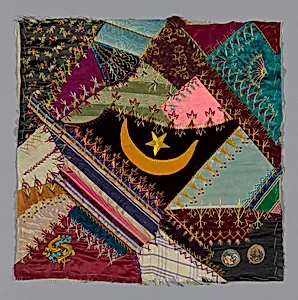
Medium
Silk, tabby, satin, velvet & twill weaves. some have warp-face, extra pattern wefts, printing, or moiré pattern, cisele velvet Embroidered in silk floss & 2 ply twist. (Backed with tabby cotton after piecing.) Embroidery thru 3 layers Stitches: Herrinbone, feather, buttonhole, cross, satin, fishbone knot, & variations with line stitch
Dimensions
44.5 × 44.5 cm (17 1/2 × 17 1/2 in.)
Classification
textile
Department
Textiles
Museum
Art Institute of Chicago
Accession Number
11790
Rights
Public Domain
Art Historical Context
This vibrant square from a "Crazy Quilt," dating to around 1884, exemplifies late 19th-century American craze for these improvisational patchwork creations. Popular among middle- and upper-class women during Victorian era, Crazy Quil departed from traditional geometric patterns embracing irregular shapes pieced from luxurious fabric scraps. Often displayed as parlor decorations rather than bedcovers, they showcased creativity, resourcefulness, and a flair for asymmetry influenced by global aesthetics like Japonisme seen at World's Fairs. Crafted from an array of silk fabrics—including tabby, satin,, and twill weaves—some adorned with warp-float patterns, printing, or shimmering moiré effects, and even ciselé velvet for texture. The square measures a perfect 44.5 × 44.5 cm and is richly embroidered through three layers (pieced top, batting, and cotton backing) using silk floss and two-ply twist threads. Skilled stitches like herringbone, feather, buttonhole, cross, satin, fishbone knot, and line variations add dimension and whimsy, transforming remnants into a tactile masterpiece. Housed in the Art Institute of Chicago's Textiles Department, this anonymous work highlights the artistic prowess of domestic needleworkers, elevating everyday sewing into fine art. It invites us to appreciate the hidden talents behind these enduring symbols of Victorian ingenuity and feminine expression.
About the Artist
Unknown
The artist designated as "Unknown" in our virtual museum's collection exemplifies a poignant chapter in art history: creators whose identities have faded into obscurity despite the enduring power of their work. With only one known artwork attributed to them in our holdings, this figure represents countless anonymous hands that shaped visual culture across centuries. Museums worldwide, including th...