
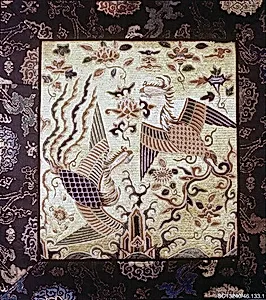
Square with Phoenixes
Unknown Artist
late 16th–early 17th century
Medium
Silk and metallic-thread embroidery on plain-weave silk
Dimensions
Overall: 7 1/16 x 6 1/2 in. (18 x 16.5 cm)
Classification
(not assigned)
Culture & Period
China · Ming dynasty (1368–1644)
Department
Asian Art
Museum
Metropolitan Museum of Art, New York, NY
Credit
Anonymous Gift, 1946
Accession Number
46.133.1
Rights
Public Domain
Tags
Art Historical Context
This exquisite *Square with Phoenixes*, crafted in late 16th– to early 17th-century during the Ming dynasty (8–1644), the era's mastery of silk embroidery. Measuring just 7 1/16 x 6 1/2 inches (18 x 16.5 cm), this square panel features dynamic phoenixes—auspicious birds symbolizing virtue, grace, and imperial harmony—rendered in vibrant silk and shimmering metallic threads on a plain-weave silk ground. Its compact size suggests it may have adorned a garment accessory, pouch, or decorative mount, reflecting the refined luxury of Ming elite textiles. Ming dynasty artisans elevated embroidery to an art form, blending technical precision with symbolic depth. The use of metallic threads catches the light, evoking the phoenixes' mythical fire and rebirth, while the plain-weave silk base provided a smooth canvas for intricate stitching techniques like satin and couching. These methods ensured durability and opulence, hallmarks of Chinese textile production that influenced global trade via the Silk Road. Today, housed in the Metropolitan Museum of Art's Asian Art Department (Anonymous Gift, 1946), this piece offers a window into Ming cultural splendor, where birds like phoenixes embodied prosperity and yin-yang balance. A testament to anonymous craftsmanship, it invites visitors to marvel at the delicate interplay of thread, color, and symbolism.