
St. James the Great
Unknown Artist
ca. 1500
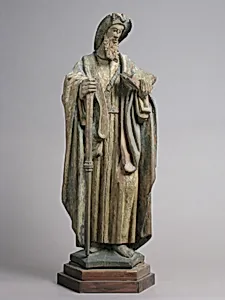
Medium
Oak with traces of polychromy and gilding
Dimensions
Overall: 24 1/4 x 9 1/2 x 5 1/4in. (61.6 x 24.1 x 13.3cm) without base: 23 1/2 x 9 x 4 1/4in. (59.7 x 22.9 x 10.8cm)
Classification
Sculpture-Wood
Culture
North Netherlandish
Department
Medieval Art
Museum
Metropolitan Museum of Art, New York, NY
Credit
Gift of J. Pierpont Morgan, 1916
Accession Number
16.32.229
Rights
Public Domain
Tags
Art Historical Context
This striking wooden sculpture of *St. James the Great crafted around 1500 by an unknown Netherlandish artist, the revered apostle in a moment of quiet devotion. Carved from oak and standing just over two feet tall (61.6 x 24.1 x 13.3 cm overall), it exemplifies the exquisite wood sculpture tradition of the late medieval period in the Northern Netherlands. Traces of original polychromy—vibrant paints—and gilding hint at its once-lively appearance, designed to draw worshippers' eyes in a church or chapel setting. North Netherlandish art from this era bridged Gothic realism and emerging Renaissance naturalism, with sculptors favoring durable oak for its fine grain, ideal for intricate details like the saint's flowing robes and pilgrim's staff (a nod to St. James as patron of pilgrims). Polychromy and gilding were essential techniques, transforming plain wood into a radiant, otherworldly figure that conveyed holiness and invited contemplation. Now housed in the Metropolitan Museum of Art's Medieval Art department, this piece was generously gifted by J. Pierpont Morgan in 1916. It offers a window into the spiritual life of 16th-century Northern Europe, where such sculptures served as focal points for prayer and community devotion.