
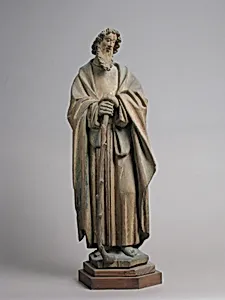
St. James the Less
Unknown Artist
ca. 1500
Medium
Oak with traces of polychromy and gilding
Dimensions
Overall: 25 1/2 x 8 1/2 x 5 1/4in. (64.8 x 21.6 x 13.3cm) without base: 23 7/8 x 8 1/4 x 5in. (60.6 x 21 x 12.7cm)
Classification
Sculpture-Wood
Culture
North Netherlandish
Department
Medieval Art
Museum
Metropolitan Museum of Art, New York, NY
Credit
Gift of J. Pierpont Morgan, 1916
Accession Number
16.32.232
Rights
Public Domain
Tags
Art Historical Context
This exquisite wooden sculpture of *St. James the Less crafted by an unknown North Netherlandish artist around 1500, captures the devotional spirit of late medieval Europe. Hailing from the Northern Netherlands during the cusp of the Renaissance, it exemplifies the region's masterful tradition of religious wood carving, often destined for churches, altars, or private chapels. St. James Less, one of Christ's apostles and son of Alphaeus, depicted with quiet reverence, reflecting the era's emphasis on intimate piety amid the vibrant cultural and religious life of the Low Countries. Carved from oak—a durable, locally abundant wood prized for its fine grain and longevity—the figure stands just over two feet tall (23 7/8 inches without base), making it ideal for processional use or personal devotion. Traces of original polychromy (vibrant paints) and gilding (gold leaf) remain, techniques that once brought the saint vividly to life, simulating flesh, fabric, and divine glow to inspire awe and faith. These methods highlight North Netherlandish sculptors' skill in blending realism with symbolism, elevating wood from humble material to sacred icon. A generous gift from J. Pierpont Morgan in 1916, this piece now graces the Metropolitan Museum of Art's Medieval Art collection, offering visitors a tangible link to 16th-century spirituality and craftsmanship.