
St. John
1615–42
Medium
Etching
Dimensions
Sheet: 5 5/16 x 7 1/4 in. (13.5 x 18.4cm) Plate: 4 3/4 x 6 3/4 in. (12 x 17.1cm)
Classification
Prints
Department
Drawings and Prints
Museum
Metropolitan Museum of Art, New York, NY
Credit
Harris Brisbane Dick Fund, 1928
Accession Number
28.91.23
Rights
Public Domain
Tags
Art Historical Context
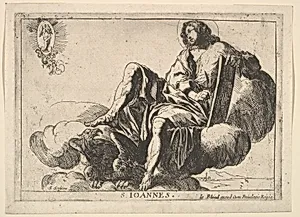
**St. John**, an etching by French artist Pierre Brébiette (active c. 1616–after 1642), captures revered figure of Saint John the Baptist a central saint in Christian iconography known as the precursor to Christ. Created sometime between 1615 and1642, this intimate print reflects the devotional art of early 17th-century France a period when religious imagery flourished amid the Counter-Reformation's emphasis on spiritual fervor and visual piety. Brébiette, a skilled printmaker, contributed to a tradition of portable, affordable artworks that brought sacred subjects into homes and personal prayer. Etching, the medium here, allowed for delicate, fluid lines etched into a metal plate with acid, producing rich tonal variations and expressive detail—ideal for rendering the saint's contemplative gaze and flowing robes. Measuring just 5 5/16 x 7 1/4 inches, its compact scale (plate: 4 3/4 x 6 3/4 inches) made it perfect for collectors and the devout. Acquired through the Harris Brisbane Dick Fund in 1928, this work now resides in the Metropolitan Museum of Art's Drawings and Prints department, exemplifying the technical finesse of French printmaking during a transformative era bridging Mannerism and Baroque. A testament to Brébiette's precision, *St. John* invites viewers to ponder the saint's wilderness solitude, blending artistry with faith in a format that democratized sacred art.
About the Artist
Pierre Brebiette · 1598–1642
Pierre Brébiette (c. 1598–c. 1642) was a French painter and etcher whose elegant, sensuous treatment of classical mythology and allegory earned him a significant reputation in early seventeenth-century Paris. Born in Mantes-sur-Seine, Brébiette traveled to Italy as a young man and lived and worked in Rome from around 1617 to approximately 1625, absorbing the influences of ancient sculpture, Renais...