
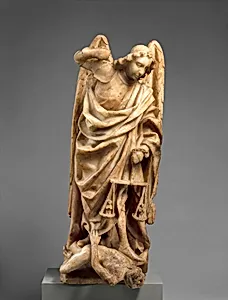
St. Michael
Unknown Artist
late 15th century
Medium
Alabaster
Dimensions
31 7/8 x 12 1/2 x 9 1/2 in., 130lb. (81 x 31.8 x 24.1 cm, 59kg) Base: 3/4 × 11 1/8 × 6 3/8 in. (1.9 × 28.3 × 16.2 cm) Other (hole for pin in base): 1 15/16 x 13/16 in. (5 x 2 cm)
Classification
Sculpture-Stone
Culture
Spanish
Department
Medieval Art
Museum
Metropolitan Museum of Art, New York, NY
Credit
Gift of J. Pierpont Morgan, 1916
Accession Number
16.32.155
Rights
Public Domain
Tags
Art Historical Context
Behold the majestic *St. Michael*, a 15th-century Spanish alabaster sculpture that captures the archangel's timeless role as heaven's warrior. Standing over 31 inches tall and weighing a substantial 130 pounds, this figure likely depicts the saint in triumphant pose, a common motif in medieval Christian iconography symbolizing the triumph of good over evil. Crafted from alabaster—a soft, translucent stone prized by sculptors for its ability to intricate details and mimic the glow of flesh—this work exemplifies the technical mastery of Spanish workshops during a period of intense religious devotion. Produced in Spain at the close of the 15th century, amid the Catholic Monarchs' unification and the eve of the Renaissance, *St. Michael* reflects the era's fervor for devotional art. Alabaster sculptures like this were often used in churches, altars, or private chapels, their pale surfaces sometimes enlivened with paint (though traces may have faded over time). The base features a practical hole for a pin, suggesting it could be mounted for processional displays or secure placement. Generously gifted to The Metropolitan Museum of Art by J. Pierpont Morgan in 1916, this anonymous masterpiece invites us to ponder the anonymous artisan's skill and the enduring spiritual power it evokes. A highlight of the Medieval Art collection, it bridges the Gothic and early Renaissance worlds with quiet grandeur.