
St. Peter Delivered from Prison
1499–1543
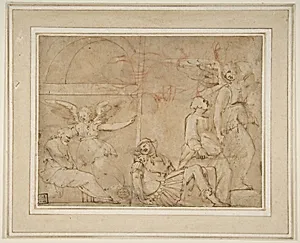
Medium
Pen and brown ink, brush and brown wash, and red chalk
Dimensions
6 x 7 7/8 in. (15.3 x 20.1 cm)
Classification
Drawings
Department
Drawings and Prints
Museum
Metropolitan Museum of Art, New York, NY
Credit
Rogers Fund, 1908
Accession Number
08.227.10
Rights
Public Domain
Tags
Art Historical Context
In the heart of Renaissance Rome, Polidoro da Caravaggio (c. 1499–1543) captured a dramatic biblical miracle in *St. Peter Delivered from*. This intimate drawing illustrates the Acts 12 story where an angel liberates the apostle Peter from Herod's chains, a popular theme symbolizing divine intervention and faith's triumph over persecution. Polidoro, a pupil in Raphael's workshop and a master of facade frescoes on Roman palaces, infused his work with the era's High Renaissance energy—dynamic figures, expressive gestures, and a sense of divine light piercing earthly shadows. Crafted with pen and brown ink, brush and brown wash, plus red chalk, this 6 x 7 7/8-inch sheet showcases virtuoso draftsmanship. The brown wash builds atmospheric depth, mimicking chiaroscuro effects later perfected by Caravaggio (no relation), while red chalk adds warmth to flesh tones. Such mixed-media techniques were prized for preparatory studies, blending precision with fluidity to convey motion and emotion. Acquired by The Metropolitan Museum of Art through the Rogers Fund in 1908, this drawing highlights Polidoro's role in bridging Raphael's grace with emerging Mannerism. For visitors, it's a window into 16th-century artistic innovation, where saints and angels danced across paper, inspiring grander frescoes and altarpieces.
About the Artist
Polidoro da Caravaggio · 1492–present
Polidoro Caldara, known as Polidoro da Caravaggio, was born around 1499 in Caravaggio, Lombardy, and emerged as one of the most innovative painters of the early Mannerist period. Arriving in Rome circa 1515 as an untrained laborer hauling plaster for the Vatican Logge decorations, he quickly caught the eye of Raphael's key assistant, Maturino da Firenze. By 1517, Polidoro had joined Raphael's work...