
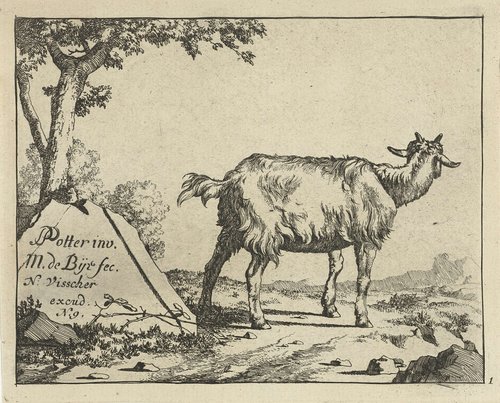
Staande geit van achter gezien
1761 - c. 1850
Medium
etching
Dimensions
145; 117
Rights
Public Domain
About this artwork
verzamelaarsmerk, verso, gestempeld: Lugt 2228
Art Historical Context
**Staande geit van gezien (Standing Goat Seen from Behind)** *Marcus de Bye, 1761–c. 1850, etching, h c.117mm × w c.145mm* Behold this delicate etching by Dutch artist Marcus de Bye, a standing goat viewed from behind in meticulous detail. Created during the late 18th to mid-19th century, small-scale work (just under 12x15 cm) exemplifies the enduring Dutch tradition of animal studies, where everyday creatures like farm animals were rendered with precision to evoke rural life and natural curiosity. De Bye's focus on the goat's form—from its sturdy legs to the subtle curve of its back—invites viewers to appreciate the quiet dignity of the commonplace. As an etching, the piece showcases a printmaking technique popular among 18th-century artists for its fine lines and tonal depth, achieved by biting acid into a metal plate. This method allowed for multiple impressions, making such intimate works accessible to collectors and scholars. The artwork bears a collector's mark on the verso (Lugt 2228), stamped in ink, signaling its provenance from a distinguished 19th- or early 20th-century collection cataloged by Frits Lugt. This mark underscores the piece's historical value, tracing its journey through connoisseurs who prized technical virtuosity and naturalistic motifs. In a museum setting, this etching reminds us how 18th-century Dutch printmakers like de Bye bridged art and observation, turning a simple barnyard scene into a timeless study of form and texture. A charming gem for animal lovers and print enthusiasts alike!