
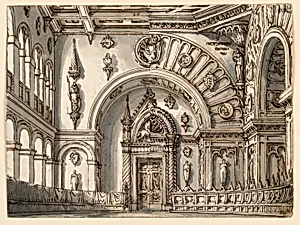
Stage Design, Council Room in Two Gothic Styles
early 19th century
Classification
theater
Department
Smithsonian Collection
Museum
Smithsonian American Art Museum
Credit
Museum purchase through gift of various donors and from Eleanor G. Hewitt Fund
Accession Number
1938-88-272
Rights
Public Domain
About this artwork
Research in Progress
Art Historical Context
Step into the dramatic world of 19th theater with *Stage Design, Council Room Two Gothic Styles* by Italian artist Romolo Achille Liverani1809–1872). Created in the early 1800s, this captivating work from the Smithsonian American Art Museum collection showcases Liverani's talent for envisioning immersive stage scenery. Acquired through museum purchase with gifts from various donors and the Eleanor G Hewitt Fund, it belongs to the museum's theater classification, highlighting the artistry behind the curtain. The design depicts a grand council room rendered in dual Gothic styles, reflecting the era's fascination with medieval revival. During the early 19th century, Gothic motifs surged in popularity across Europe, fueled by Romanticism's love for the sublime and historical fantasy. In theater, such elaborate backdrops transported audiences to imagined pasts, enhancing plays with atmospheric depth—think shadowy arches, pointed vaults, and intricate stonework that evoked mystery and power. Liverani, active in Italy's vibrant cultural scene, exemplifies how visual artists bridged fine art and performance. This piece offers a window into the collaborative magic of stagecraft, where a single design could inspire directors and set builders to craft worlds onstage. Though research continues, its presence in the Smithsonian underscores the enduring allure of Gothic theatricality.