
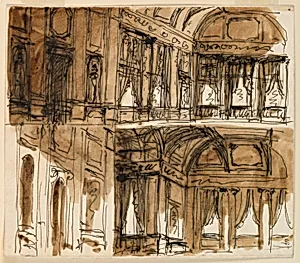
Stage Design for the Interiors of a Palace
Classification
theater
Department
Smithsonian Collection
Museum
Smithsonian American Art Museum
Credit
Museum purchase through gift of various donors and from Eleanor G. Hewitt Fund
Accession Number
1938-88-143
Rights
Public Domain
About this artwork
Research in Progress
Art Historical Context
Giuseppe Barberi, a Italian artist and architect (1746–1809), this *Stage Design for the Inter of a Palace* in1778, capturing the opulent splendor of grand European palaces for the theatrical stage. As a theater piece in the Smithsonian American Art Museum collection, it exemplifies the intricate scenic designs that transformed bare stages into immersive worlds, likely for operas or lavish productions popular in 18th-century Italy. During the late Enlightenment era, Barberi's work reflected the neoclassical fascination with ancient Roman architecture and symmetry, adapting architectural motifs like ornate columns, frescoed ceilings, and gilded details to evoke imperial luxury. These designs were essential for directors and machinists, enabling dramatic scene changes that heightened the emotional impact of performances in Rome's vibrant opera houses. Acquired through museum purchase and the Eleanor G. Hewitt Fund, this artwork highlights the fusion of architecture and performance art. Though research continues, it offers a window into how stagecraft brought aristocratic fantasy to life, delighting audiences with illusions of grandeur. (198 words)