
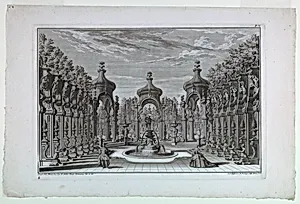
Stage Design: Garden Scene with Fountain, plate 8, part 5, from "Architetture e Prospettive dedicate alla Maestà di Carlo Sesto"
Classification
theater
Department
Smithsonian Collection
Museum
Smithsonian American Art Museum
Credit
Gift of Roger Selchow
Accession Number
1988-102-57
Rights
Public Domain
About this artwork
Research in Progress
Art Historical Context
Behold this enchanting *Stage Design: Garden Scene Fountain*, plate 8, part 5 from Johann Andreas Pfeffel's *Architetture e Prospett dedicate alla Maestà di Carlo Sesto* (ures and Perspectives Dedicated to Majesty of Charles VI). Created by the German artist (1674–1748) between 1740 and1744, this work captures the grandeur of 18th-century theater scenery. Pfeffel, a skilled engraver, specialized in intricate architectural views that brought operatic and dramatic stages to life, evoking illusory depth and splendor for audiences across Europe. Dedicated to Holy Roman Emperor Charles VI, a lavish patron of the arts, the series showcases fantastical garden vistas with fountains, arches, and lush foliage—hallmarks of Baroque stagecraft. These designs were not mere sketches but blueprints for wooden sets painted to mimic marble and verdant paradise, using masterful linear perspective to draw viewers into infinite space. Printed as plates, they allowed theater designers to share innovative ideas far beyond the court. Today, this piece from the Smithsonian American Art Museum's collection (gift of Roger Selchow) highlights the fusion of art and performance in the Enlightenment era, reminding us how ephemeral theater magic was preserved through print. A window into Pfeffel's world of spectacle!