
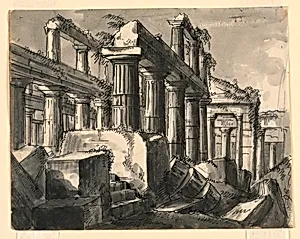
Stage Design, Ruins of Temple
early 19th century
Medium
theater
Classification
theater
Department
Smithsonian Collection
Museum
Smithsonian American Art Museum
Credit
Museum purchase through gift of various donors and from Eleanor G. Hewitt Fund
Accession Number
1938-88-303
Rights
Public Domain
About this artwork
Research in Progress
Art Historical Context
**Stage Design, Ruins of Temple** Romolo Achille Liver (Italian, 1809–1872) captures the dramatic allure of early 19th theater. Created during a time when grand opera and spectacle dominated European stages, this work served as painted backdrop, immersing audiences in evocative classical ruins. Liverani, a skilled Italian artist active in the Romantic era, specialized in such designs that blended architectural precision with atmospheric mood, transporting viewers to ancient worlds without leaving their seats. The depiction of a temple in decay reflects the era's fascination with antiquity and the sublime—hallmarks of Neoclassicism and emerging Romanticism. These stage designs were not mere decoration; they were engineering marvels of perspective and light, using gouache or watercolor on paper to create illusions of depth on vast theater canvases. Held in the Smithsonian American Art Museum's theater collection (museum purchase through various donors and the Eleanor. Hewitt Fund), it highlights how visual arts fueled cultural storytelling. Though research continues, this piece invites us to imagine flickering gaslights revealing crumbling columns, evoking the timeless drama of human impermanence. A window into Italy's vibrant theatrical heritage! (198 words)