
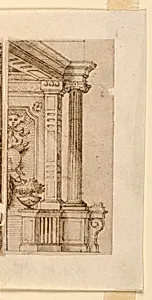
Stage Design: Side Wing
ca. 1675 - 1690
Classification
Drawing
Department
Smithsonian Collection
Museum
Smithsonian American Art Museum
Credit
Museum purchase through gift of various donors and from Eleanor G. Hewitt Fund
Accession Number
1938-88-1046
Rights
Public Domain
About this artwork
Research in Progress
Art Historical Context
Giuseppe Barberi, an artist active in the late 18th century (1746–1809), created this intriguing *Stage Design: Side Wing a drawing dated around 1675–1690. As a side wing—a vertical flat used in Baroque theater to frame scenes and create illusory depth—this work captures the theatrical magic of Italy's opulent stagecraft era. the date precedes Barberi's lifespan, suggesting possible attribution research or workshop influence, it evokes the grandeur of 17th-century houses like those in Venice and Rome, where elaborate scenery transported audiences to fantastical realms. Barberi's architectural background shines through in such designs, blending perspective tricks and decorative motifs to enhance dramatic illusion. Drawn with an unknown medium, likely ink or chalk on paper, it exemplifies the technical drawings that guided carpenters and painters in constructing immersive sets for commedia dell'arte or grand operas. These wings were pivotal in the "theatrum pictorium," turning stages into living paintings. Housed in the Smithsonian American Art Museum through generous donor gifts, this piece invites ongoing scholarly exploration ("Research in Progress"). It reminds us how drawings like this fueled Europe's cultural spectacle, bridging art and performance in a time of artistic innovation.