
Standard Bearer
second quarter 16th century
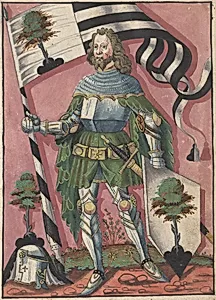
Medium
pen and black ink with gouache and watercolor
Dimensions
image: 20.2 x 14.5 cm (7 15/16 x 5 11/16 in.) sheet: 28.1 x 19.7 cm (11 1/16 x 7 3/4 in.)
Classification
Drawing
Department
CG-E
Museum
National Gallery of Art, Washington, D.C.
Credit
Gift of Mr. and Mrs. John Steiner
Accession Number
1982.5.2
Rights
Public Domain
Art Historical Context
"Standard Bearer" is a dynamic drawing from the second quarter of the 16th century, created by an anonymous German artist during the Northern Renaissance. This intimate work on paper captures a figure proudly holding a banner aloft, evoking the pageantry of military processions or ceremonial events common in the era. Measuring just 20.2 x 14.5 cm, it exemplifies the meticulous preparatory studies favored by artists of the time, blending fine penwork with subtle color. Executed in pen and black ink heightened with gouache and watercolor, the piece showcases virtuoso techniques: the ink provides crisp, expressive lines for contours and details like fabric folds, while gouache—opaque watercolor—adds vivid highlights and depth to the figure's attire and flag. Watercolor washes contribute atmospheric shading, a hallmark of German draftsmanship influenced by masters like Albrecht Dürer, though this remains unattributed. Housed in the National Gallery of Art's Department of Drawings (CG-E) as a generous gift from Mr. and Mrs. John Steiner, "Standard Bearer" offers a window into 16th-century life and artistry. Such works were often models for larger paintings or prints, highlighting the era's emphasis on realism and narrative detail in service of historical and symbolic themes.
About the Artist
German 16th Century · 1500–1600
The designation "German 16th Century" refers to a collective of anonymous artists active during the height of the German Renaissance, a period marked by profound artistic innovation amid the Protestant Reformation and humanist revival. Little is known about the individual lives or training of these makers, as their identities remain undocumented, with works often attributed based on regional style...