
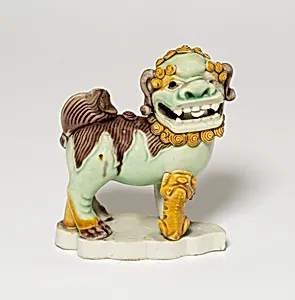
Standing Lion
Qing dynasty (1644–1911), Kangxi period (1662–1722)
Medium
Stoneware with green, yellow, and brown glazes
Dimensions
9.4 × 7.9 × 3.9 cm (3 11/16 × 3 1/8 × 1 9/16 in.)
Classification
porcelain
Department
Arts of Asia
Museum
Art Institute of Chicago
Accession Number
42259
Rights
Public Domain
Art Historical Context
This delightful Standing Lion, crafted during the Kangxi period (1662–1722) of China's Qing dynasty, exemplifies the era's mastery of ceramic artistry. Measuring just 9.4 × 7.9 × 3.9 cm, this petite stoneware figurine captures a majestic beast in a poised, alert stance, its form enlivened by vibrant green, yellow, and brown glazes. Produced at imperial kilns like those in Jingdezhen, Kangxi wares marked a pinnacle of technical innovation, blending durability of stoneware with porcelain-like refinement—despite its classification as porcelain in museum collections. In Chinese culture, lions symbolized imperial power, protection, and good fortune, often depicted as fierce guardians warding off evil. These small figurines were prized by scholars and elites for desk adornments, altars, or playful displays, reflecting the Kangxi emperor's patronage of the arts during a time of prosperity and cultural flourishing. The subtle glaze variations—shades evoking fur, eyes, and mane—highlight advanced overglaze techniques, showcasing the period's experimentation with color and texture. Today, housed in the Art Institute of Chicago's Arts of Asia department, this anonymous masterpiece invites us to appreciate the Qing dynasty's blend of whimsy and symbolism in everyday luxury.
About the Artist
Unknown
The artist designated as "Unknown" in our virtual museum's collection exemplifies a poignant chapter in art history: creators whose identities have faded into obscurity despite the enduring power of their work. With only one known artwork attributed to them in our holdings, this figure represents countless anonymous hands that shaped visual culture across centuries. Museums worldwide, including th...