
Star-Shaped Tile
Unknown Artist
13th century
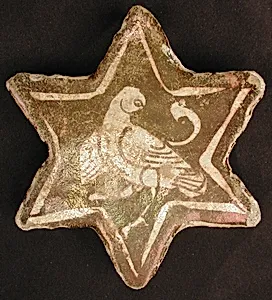
Medium
Stonepaste; overglaze and luster-painted
Classification
Ceramics-Tiles
Department
Islamic Art
Museum
Metropolitan Museum of Art, New York, NY
Credit
Gift of Rafael Guastavino, 1928
Accession Number
28.89.7
Rights
Public Domain
Tags
Art Historical Context
This exquisite star-shaped tile, crafted by an unknown artist in the13th century, h from the vibrant world of Islamic art. Likely originating from regions like Syria or Iran during the medieval Islamic Golden Age, such tiles adorned the intricate interiors of mosques,, and madrasas. Their star form echoes the geometric precision of Islamic architecture, symbolizing infinite patterns of the universe and divine order, while motifs of birds—evident in the tags—often evoke paradise gardens and spiritual harmony. Made from stonepaste, a fine-grained ceramic body developed by Islamic potters to mimic Chinese porcelain, the tile features overglaze painting and luster techniques. Lusterware, a hallmark innovation of the era, involves applying metallic oxides fired in a reducing atmosphere to create a shimmering, iridescent glow that catches the light like gold or silver. This labor-intensive process highlights the technical mastery of medieval artisans, blending functionality with opulent beauty. A generous gift to the Metropolitan Museum of Art in 1928 from Rafael Guastavino, this tile invites visitors to marvel at the enduring legacy of Islamic ceramics—where form, faith, and artistry converge in timeless splendor.