
Star-Shaped Tile
Unknown Artist
13th century
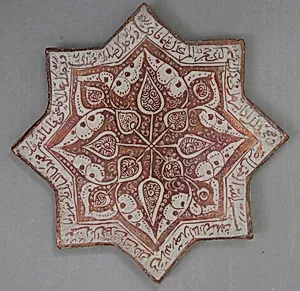
Medium
Stonepaste; luster-painted on opaque white glaze with touches of cobalt
Dimensions
H. 8 in. (20.3 cm) W. 8 in. (20.3 cm)
Classification
Ceramics-Tiles
Department
Islamic Art
Museum
Metropolitan Museum of Art, New York, NY
Credit
H.O. Havemeyer Collection, Gift of Horace Havemeyer, 1941
Accession Number
41.165.29
Rights
Public Domain
Tags
Art Historical Context
This exquisite star-shaped tile, crafted in the 13th by an unknown artist, exemplifies the pinnacle of Islamic ceramic artistry. Measuring 8 inches across, it is made of stonepaste—a composite body of quartz, clay, and frit that mimics porcelain's translucencyglazed with an opaque white. The surface is adorned with luster-painting, sophisticated technique where metallic oxides create a shimmering, iridescent gold effect, accented by touches of cobalt blue. Delicate leaf motifs, hinted at in its design, evoke the natural world within the rigid geometry of the star form, a hallmark of Islamic decorative patterns. Originating likely from Persia or Syria during the medieval Islamic golden age, such tiles were prized for architectural use in mosques, madrasas, and palaces. The lusterware revival in the 13th century under Seljuk and Mongol influences represented technical innovation, as artisans mastered complex firings to achieve the luster's glow—first developed in Abbasid Iraq centuries earlier. This opacity and shine made tiles durable for lavish interiors, symbolizing divine light and cosmic order. Today, housed in the Metropolitan Museum of Art's Islamic Art department from the H.O. Havemeyer Collection, this tile invites visitors to marvel at how everyday materials became vessels for spiritual beauty, blending math, nature, and metallurgy in timeless elegance.