
Star-Shaped Tile
Unknown Artist
1264–65
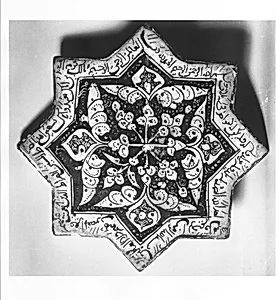
Medium
Stonepaste; luster-painted with touches of cobalt on opaque white glaze under transparent glaze
Dimensions
H. 8 in. (20.3 cm) W. 8 in. (20.3 cm) Wt. (whole group): 51 lb. (23.1 kg)
Classification
Ceramics-Tiles
Department
Islamic Art
Museum
Metropolitan Museum of Art, New York, NY
Credit
H.O. Havemeyer Collection, Gift of Horace Havemeyer, 1941
Accession Number
41.165.21
Rights
Public Domain
Art Historical Context
Behold the *Star-Shaped Tile*, a radiant gem from the Islamic world crafted around 1264–65. This eight-inch square tile, part of a larger ensemble weighing over 51 pounds, hails from a golden age of ceramic innovation in the medieval Near East, likely Syria or Iran amid the dynamic cultural exchanges of the Mamluk and early Ilkhanid periods. Displayed in the Metropolitan Museum of Art's Islamic Art department, it entered the collection through the generous H.O. Havemeyer gift in 1941. Masterfully executed in stonepaste—a fine, vitreous ceramic body prized for its durability and ability to hold intricate details—the tile features luster-painting with subtle cobalt accents on an opaque white glaze, sealed under a transparent layer. This advanced technique, perfected by Islamic artisans since the 9th century, creates a shimmering metallic iridescence that mimics precious gold and silver, evoking the opulence of palace interiors or mosque decorations. The star shape exemplifies the geometric precision central to Islamic design, symbolizing cosmic harmony and infinity. Such tiles adorned architectural wonders like mihrabs and domes, blending artistry with spirituality. Though by an unknown hand, this piece captures the era's technical virtuosity and aesthetic splendor, inviting visitors to ponder the enduring legacy of Islamic craftsmanship.