
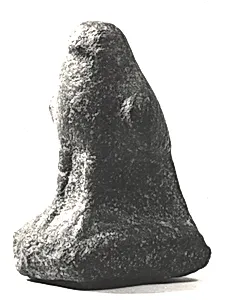
Statuette of a Falcon
Unknown Artist
304–30 B.C.
Medium
Porphyry
Dimensions
H. 10.8 cm (4 1/4 in)
Classification
Statuette, falcon
Period
Ptolemaic Period
Department
Egyptian Art
Museum
Metropolitan Museum of Art, New York, NY
Credit
Purchase, Fletcher Fund and The Guide Foundation Inc. Gift, 1966
Accession Number
66.99.146
Rights
Public Domain
Tags
Art Historical Context
Nestled in the Egyptian Art galleries of the Metropolitan Museum of Art, this exquisite *Statuette of a Falcon (H. 10.8 cm) hails from the Ptolemaic Period (304–30 B.C.), the final flourish of ancient Egypt under Greek Ptolemaic rule. Crafted from porphyry—a rare, purple-hued hardstone quarried from Egypt's Eastern Desert—this small sculpture captures the falcon in poised vigilance, its sleek form embodying the bird's divine grace. Acquired in 1966 through the Fletcher Fund and The Guide Foundation Inc. Gift, it exemplifies the era's masterful stone carving traditions. In ancient Egyptian culture, the falcon was the sacred emblem of Horus, the sky god of kingship, protection, and royal power. Such statuettes were often votive offerings placed in temples or used as amulets, invoking Horus's watchful gaze to safeguard the living or guide the deceased. The Ptolemaic Period blended enduring Egyptian iconography with Hellenistic influences, yet this piece retains pure pharaonic symbolism, highlighting the dynasty's embrace of local religious practices to legitimize their rule. Porphyry's imperial purple tone evoked rarity and divinity, demanding exceptional lapidary skill to shape its unyielding surface into fine feathers and alert eyes. At just over four inches tall, this statuette invites us to marvel at the sculptor's precision, a testament to Egypt's enduring artistic legacy.