
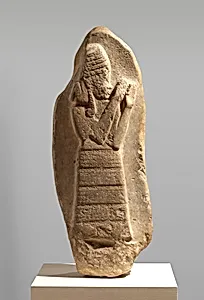
Stele of the protective goddess Lama
Unknown Artist
ca. 1307–1282 BCE
Medium
Gypsum alabaster
Dimensions
33 × 12 × 8 in., 198 lb. (83.8 × 30.5 × 20.3 cm)
Classification
Stone-Sculpture-Inscribed
Culture & Period
Kassite · Kassite
Department
Ancient Near Eastern Art
Museum
Metropolitan Museum of Art, New York, NY
Credit
Gift of E. S. David, 1961
Accession Number
61.12
Rights
Public Domain
Tags
Art Historical Context
Step into the ancient world of Kassite Babylonia with the *Stele of the Protective Lama*, a striking gypsum alabaster sculpture dating to around 1307–1282 BCE. Crafted during the Kassite period (ca. 1595–1155 BCE), when this dynasty ruled southern Mesopotamia after the fall of the Old Babylonian Empire the stele stands over 33 inches tall and weighs nearly 200 pounds. Its monumental form and inscribed surface mark it as a classic example of Ancient Near Eastern stone sculpture, likely dedicated to invoke divine protection. Lama, a benevolent goddess revered for safeguarding against evil spirits and misfortune, is depicted in a style typical of Kassite art—rigid yet imposing, with hands raised in a gesture of blessing. Gypsum alabaster, a soft yet durable translucent stone quarried locally, allowed artisans to carve intricate details and inscriptions with precision, often invoking the goddess's apotropaic powers. Such steles were commonly placed at temple entrances or doorways, serving as spiritual guardians for sacred spaces. This powerful artifact, now in the Metropolitan Museum of Art's Department of Ancient Near Eastern Art, offers a window into Kassite religious life, where divine intercessors like Lama bridged the human and supernatural realms, ensuring prosperity and safety in an unpredictable world.