
Relief of Queen Nefertiti
Unknown Artist
ca. 1353–1336 B.C.
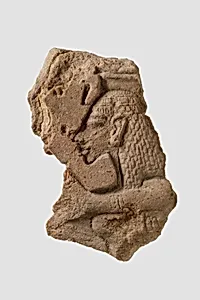
Medium
Quartzite
Dimensions
h. 13 × w. 9 × d. 2.5 cm (5 1/8 × 3 9/16 × 1 in.)
Classification
Relief, queen Nefertiti
Period
New Kingdom, Amarna Period
Department
Egyptian Art
Museum
Metropolitan Museum of Art, New York, NY
Credit
Rogers Fund, 1947
Accession Number
47.57.1
Rights
Public Domain
Tags
Art Historical Context
This exquisite quartzite relief depicts Queen Nefertiti, of ancient Egypt's most iconic figures from the Amarna Period of the New Kingdom (ca. 1353–1336 B.C.), during Dynasty 18. Carved under the reign of her husband, Pharaoh Akhenaten, this artwork (just 13 cm high) captures the revolutionary spirit of the era. The Amarna style broke from rigid conventions, introducing more naturalistic proportions, elongated features, and intimate expressions that humanized royalty, reflecting Akhenaten's radical monotheistic worship of the sun god Aten. Crafted from durable quartzite—a hard, fine-grained stone favored for its luminous polish and resistance to wear—the relief showcases masterful low-relief carving techniques. Subtle incisions define Nefertiti's graceful profile, signature tall headdress, and serene gaze, evoking her divine beauty and power. Such intimate pieces were likely used in private shrines or jewelry boxes, blending artistry with personal devotion. Housed in the Metropolitan Museum of Art's Egyptian Art department (acquired via the Rogers Fund in 1947), this relief offers a rare glimpse into Nefertiti's enduring legacy as a co-regent and cultural innovator. Her image symbolizes the Amarna revolution, bridging art, religion, and queenship in a transformative moment of Egyptian history.