
Stencil
Unknown Artist
Medium
Paper and silk
Dimensions
12 1/4 x 16 1/2 in. (31.1 x 41.9 cm)
Classification
Stencils
Culture & Period
Japan · Edo period (1615–1868)
Department
Asian Art
Museum
Metropolitan Museum of Art, New York, NY
Credit
Gift of Clarence McKenzie Lewis, 1953
Accession Number
53.101.10
Rights
Public Domain
Tags
Art Historical Context
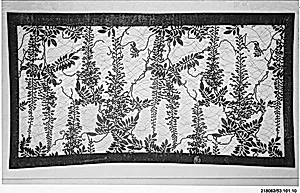
This delicate stencil from Japan's Edo period (16151868), housed in the Metropolitan Museum of's Asian Art Department, exemplifies the artistry of everyday craftsmanship in a time of cultural flourishing. Crafted from paper and silk, it measures 12¼ x 16½ inches (31.1 x 41.9 cm) and intricate plant motifs—a common theme in Japanese design symbolizing nature's harmony and seasonal beauty. Gifted to the museum in 1953 by Clarence McKenzie, it invites us to appreciate the anonymous skill of its unknown creator. Edo-era stencils, known as *kata*, were essential tools for *katazome*, a resist-dyeing technique used to pattern luxurious textiles like kimonos and noren shop curtains. The paper base was meticulously cut with fine blades to create openwork designs, often reinforced with silk threads to prevent tearing during repeated use with rice-paste resists and dyes. This method allowed for vibrant, repeatable patterns that democratized elaborate decoration beyond elite embroidery. As a window into Tokugawa Japan's urban prosperity and love for nature-inspired motifs, this stencil highlights how functional objects embodied aesthetic refinement. Though its precise date remains unknown, it reflects the period's innovative fusion of utility and elegance, bridging art and daily life.