
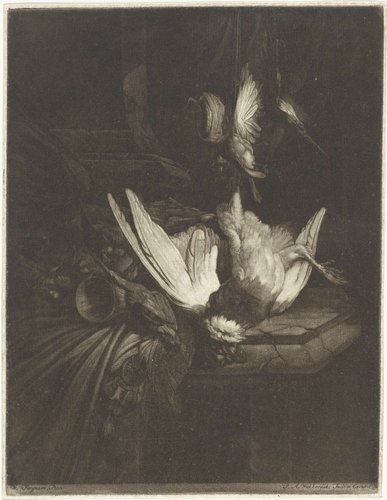
Stilleven met gevogelte
1740 - 1774
Medium
paper
Dimensions
229; 175
Rights
Public Domain
About this artwork
verzamelaarsmerk, verso, gestempeld: Lugt 2228
Art Historical Context
**Stilleven met gevogelte** by Pieter Anthony Wakkerdak is a charming 18th-century Dutch still life, likely depicting poultry or game birds in exquisite detail. Created sometime between 1740 and 1774, this intimate work measures just 229 × 175 mm, rendered on paper—a medium favored for preparatory studies, sketches, or affordable collector's pieces during the Dutch Golden Age's later phase. Its modest scale invites close viewing, revealing the artist's keen observation of natural forms and textures. In the Netherlands of the 1700s, still lifes like this continued the Golden Age tradition pioneered by masters such as Willem Kalf and Rachel Ruysch, celebrating abundance while subtly nodding to *vanitas* themes of life's fleeting pleasures. Wakkerdak's contribution, though lesser-known, exemplifies the era's meticulous draftsmanship, possibly using ink, wash, or gouache to capture feathers' delicate sheen and lifelike plumage. Such works were prized by connoisseurs for their technical virtuosity and trompe-l'œil effects. Adding to its allure, the verso bears a stamped collector's mark (Lugt 2228) from the esteemed library of Eugène Rodrigues, a 19th-century French bibliophile and art enthusiast. This provenance underscores the drawing's enduring appeal, bridging 18th-century artistry with later scholarly appreciation. A hidden gem for still life lovers!
About the Artist
Pieter Anthony Wakkerdak · 1729–1774
Pieter Anthony Wakkerdak (1729–1774) was a Dutch printmaker, painter, draughtsman, publisher, and poet whose brief but productive career exemplified the versatility expected of 18th-century Dutch artists. Born on June 14, 1729, in Rotterdam and dying on November 28, 1774, in Delft at just forty-five years old, Wakkerdak worked across multiple media including mezzotint (black art), oil painting, en...