
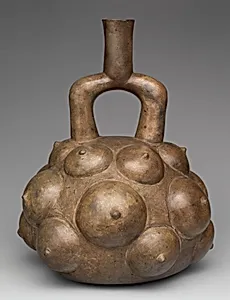
Stirrup-spout bottle with fruits
1200–800 BCE
Medium
Ceramic
Dimensions
H. 11 3/8 × Diam. 9 1/4 in. (28.9 × 23.5 cm)
Classification
Ceramics-Containers
Culture
Cupisnique
Department
Arts of Africa, Oceania, and the Americas
Museum
Metropolitan Museum of Art, New York, NY
Credit
The Michael C. Rockefeller Memorial Collection, Purchase, Nelson A. Rockefeller Gift, 1967
Accession Number
1978.412.205
Rights
Public Domain
Art Historical Context
Step into the vibrant world of ancient Peru with this *Stirrup-spout bottle with fruits*, crafted by Cupisnique artists around 1200–800 BCE. Hailing from the north coast of Peru, theisnique culture produced some of the earliest sophisticated ceramics in the Andes, blending functionality with artistic flair. This, standing 11 3/8 inches tall with a 9 1/4-inch diameter, exemplifies their mastery of clay, fired to create durable, elegantly shaped containers. The defining feature is its stirrup-spout design—a-chambered form with a bridged handle and arched spout, ideal for pouring liquids like chicha (fermented corn beer) without spilling. Adorned with motifs of fruits, it showcases the Cupisnique penchant for naturalistic imagery, likely evoking abundance and the fertile coastal environment. Such bottles were essential for rituals, feasting, or daily use, highlighting the culture's advanced pottery techniques like slip-painting and modeling. Now part of The Metropolitan Museum of Art's Michael C. Rockefeller Memorial Collection, this piece bridges early Andean innovation and later traditions like those of the Moche. It invites us to marvel at how 3,000-year-old hands captured the essence of nature in enduring clay.