
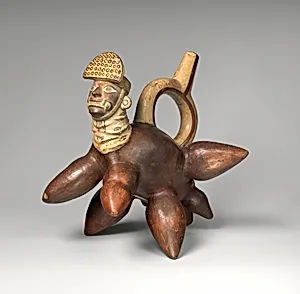
Stirrup-spout bottle with manioc form
600–800 CE
Medium
Ceramic, slip
Dimensions
H. 12 1/2 × W. 8 1/2 × D. 12 1/2 in. (31.8 × 21.6 × 31.8 cm)
Classification
Ceramics-Containers
Culture
Moche
Department
Arts of Africa, Oceania, and the Americas
Museum
Metropolitan Museum of Art, New York, NY
Credit
Gift of Mr. and Mrs. Nathan Cummings, 1964
Accession Number
64.228.57
Rights
Public Domain
Art Historical Context
This exquisite stirrup-spout bottle, crafted by Moche artist(s between 600–800 CE, takes the form of manioc (cassava), a vital root crop in ancient Andean agriculture. Standing at 12½ inches tall, wide, and deep, this ceramic vessel features a distinctive double-chambered stirrup spout—a hallmark of Moche pottery design that allowed liquids to be poured without spilling, ideal for rituals, offerings, or daily use. The slip-painted surface, a technique involving colored clay slips applied before firing, highlights the plant's textured roots and bulbous form, showcasing the Moche's keen observation of nature. The Moche culture, flourishing on Peru's northern coast, were master ceramicists renowned for their naturalistic and portrait-like vessels. These bottles often depicted plants, animals, and deities, reflecting a worldview intertwined with agriculture, fertility, and cosmology. By modeling this one after manioc, the artists celebrated a staple food that sustained their society amid arid conditions, possibly invoking abundance in ceremonies. Housed in the Metropolitan Museum of Art's Arts of Africa, Oceania, and the Americas department as a gift from Mr. and Mrs. Nathan Cummings in 1964, this piece exemplifies Moche innovation in form and function, bridging utility and artistry in pre-Columbian America.