
Stomacher
Unknown Artist
1720s
Medium
Silk, metal
Classification
Stomacher
Culture
British
Department
Costume Institute
Museum
Metropolitan Museum of Art, New York, NY
Credit
Purchase, Rogers Fund, Isabel Shults Fund and Irene Lewisohn Bequest, 1991
Accession Number
1991.6.2
Rights
Public Domain
Art Historical Context
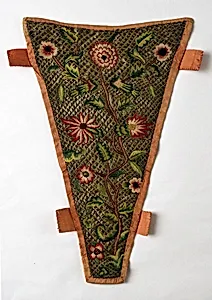
Step into the opulent world of 18th-century British fashion with exquisite *Stomacher* from the 1720s, now housed in the Metropolitan Museum of Art's Costume Institute. A stomacher was a striking triangular panel worn by women to adorn the front of their bodices, filling the deep V-neckline of corseted gowns. This decorative element was both functional and fashionable, pinned or laced in place to create a harmonious silhouette that emphasized elegance and status during the early Georgian era. Crafted from luxurious silk embellished with gleaming metal—likely threads, sequins, or spangles—this piece showcases the era's masterful embroidery techniques. British textile artisans of the time drew on continental influences, blending intricate stitching with shimmering metallic accents to catch the light at royal courts and social gatherings. The combination of soft silk and durable metal highlights the period's technical innovation, making garments not just wearable art but symbols of wealth and refinement. Acquired in 1991 through the Rogers Fund, Isabel Shults Fund, and Irene Lewisohn Bequest, this stomacher offers a tactile glimpse into women's lives amid the Rococo's budding extravagance. Imagine it sparkling against a pastel silk gown at a London assembly— a testament to how costume conveyed identity in Georgian Britain.