
Stone Fish Pendant
Unknown Artist
8th–mid-16th century
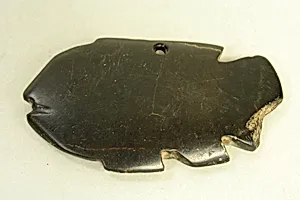
Medium
Stone
Dimensions
H. 1 5/8 x W. 2 11/16in. (4.1 x 6.8cm)
Classification
Stone-Ornaments
Culture
Peru; north coast (?)
Department
Arts of Africa, Oceania, and the Americas
Museum
Metropolitan Museum of Art, New York, NY
Credit
Gift of Mr. and Mrs. Nathan Cummings, 1964
Accession Number
64.228.731
Rights
Public Domain
Tags
Art Historical Context
Behold the **Stone Fish Pendant**, a carved stone ornament from Peru's north coast, dating from the 8th to mid-16th century Measuring just 1 5/8 x 2 11/16 inches (4.1 x 6.8 cm), this small treasure captures the essence of a fish in smooth, flowing lines, likely worn as personal jewelry. Crafted by an unknown artist it exemplifies the refined stone-carving traditions of pre-Columbian cultures, now housed in the Metropolitan Museum Art's Department of Arts of Africa,, and the Americas (gift of Mr. and Mrs. Nathan Cummings, 1964). Spanning over 700 years, the pendant bridges major eras on Peru's fertile north coast, from regional chiefdoms like the Chimú to the eve of Spanish conquest. Fish motifs were vital in these coastal societies, symbolizing the sea's abundance— a lifeline for fishing communities. The "?" in its attribution hints at ongoing scholarly debate, underscoring the mysteries of ancient Peruvian artistry. Its compact form and tactile stone medium highlight masterful craftsmanship, where every curve evokes marine vitality. As a "Stone-Ornament," it invites us to imagine it adorning a neck or wrist, connecting wearers to their watery world and enduring legacy. A perfect emblem of how everyday objects reveal profound cultural stories!