
Unidentified Object
Unknown Artist
9th–10th century
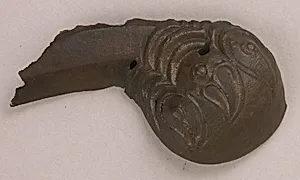
Medium
Bronze; cast
Dimensions
H. 1 1/4 in. (3.2 cm) W. 2 3/8 in. (6 cm) D. 1/2 in. (1.3 cm) Wt. 0.4 oz. (11.3 grams)
Classification
Metal
Department
Islamic Art
Museum
Metropolitan Museum of Art, New York, NY
Credit
Rogers Fund, 1940
Accession Number
40.170.262
Rights
Public Domain
Art Historical Context
This delicate bronze object, cast in the 9th–10th century during the Abbasid Caliphate's golden age, invites us into the sophisticated world of early Islamic metalwork. Measuring just 1¼ inches high and 2⅜ inches wide, with a slim ½-inch depth and a mere 0.4 ounces in weight, it exemplifies the exquisite miniaturization prized in Islamic art. Though its exact purpose remains unidentified—perhaps a decorative plaque, amulet, or furniture inlay—its survival speaks to the era's mastery of lost-wax casting, a technique that allowed for intricate details on small scales. In the Islamic world, bronze casting flourished in centers like Baghdad and Mesopotamia, blending Persian, Byzantine, and local traditions. Artisans often adorned such pieces with subtle motifs, though this one's plain form highlights the material's inherent beauty: bronze's warm patina and durability made it ideal for everyday luxury items. This artifact, acquired through the Rogers Fund in 1940, reflects the Metropolitan Museum of Art's commitment to preserving these humble yet profound relics. Today, it reminds us how Islamic craftsmen elevated functional objects into art, bridging utility and elegance in a vibrant multicultural empire. A quiet treasure, it whispers of forgotten hands shaping history.