
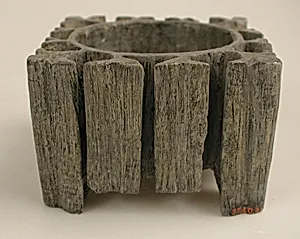
Stone Oil Lamp
Unknown Artist
9th–10th century
Medium
Steatite; carved
Dimensions
H. 2 in. (5.1 cm) W. 3 in. (7.6 cm)
Classification
Stone
Department
Islamic Art
Museum
Metropolitan Museum of Art, New York, NY
Credit
Rogers Fund, 1937
Accession Number
37.40.48
Rights
Public Domain
Art Historical Context
This delicate stone oil lamp, carved from steatite in the 9th–10th century offers a glimpse into everyday life in the Islamic world during the Abbasid era. Measuring just 2 inches high and inches wide, its compact form made it ideal for illuminating homes, mosques, or travelers' camps, where a simple wick dipped in oil provided soft, flickering light. Acquired through the Rogers Fund in 7, it now resides in the Metropolitan of Art's Islamic Art, exemplifying the blend of utility and artistry in medieval Islamic craftsmanship. Steatite, or soapstone, was a favored medium for such objects due to its softness, allowing skilled artisans to carve intricate details with basic tools. Though the artist remains unknown, the lamp's precise workmanship highlights the high level of stone carving prevalent across regions from Iraq to Persia, where functional items were often elevated to aesthetic beauty. These lamps were essential in a pre-electric age, symbolizing hospitality and spiritual devotion—light being a potent metaphor in Islamic tradition. As a modest yet masterful survivor from over a millennium ago, this piece underscores how Islamic art infused the mundane with elegance, bridging domestic rituals and cultural heritage for generations of museum visitors to appreciate.