
BK-1970-270
ca. 1815 - ca. 1825
Medium
bobbin lace
Dimensions
2; 6; 255
Rights
Public Domain
About this artwork
length 255 cm x width 6 cm x 2 cm
Art Historical Context
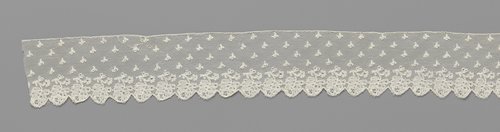
Welcome to our exhibit featuring *BK-1970-270*, an exquisite anonymous bobbin lace created around 1815–1825. Measuring an impressive 255 cm in length and just 6 cm in width (with a depth of 2 cm), this delicate strip exemplifies the artistry of early 19th-century lace-making. Its slender, elongated form suggests it was likely designed as a decorative border orounce for garments, shawls, or household linens, highlighting the era's fascination with ornamental textiles. Bobbin lace, the medium here, is a labor-intensive technique originating in Europe during the Renaissance and peaking in popularity through the 18th and 19th centuries. Artisans used small wooden bobbins to twist and interlace fine threads—often linen or cotton—into intricate, geometric patterns on a pillow-like support. This method demanded exceptional precision and patience, transforming simple threads into lightweight, translucent fabrics that mimicked woven cloth but with far greater complexity. By the Regency period (ca. 1811–1820), such laces adorned the fashions of the elite, symbolizing refinement and craftsmanship amid the Industrial Revolution's rise. Though the maker remains unknown—typical for many handmade laces produced in workshops or by rural lacemakers—this piece preserves a snapshot of pre-mechanized textile artistry. Its survival underscores the cultural value placed on handmade luxuries, bridging handmade tradition and emerging machine production in the early 1800s. A true testament to unseen hands shaping beauty! (198 words)
About the Artist
anonymous
In the vast tapestry of art history, "Anonymous" stands not as a singular individual but as a collective designation for countless unidentified creators whose works have endured across millennia. These artists, spanning prehistoric cave painters to medieval illuminators and folk craftsmen, produced the foundational layers of human visual culture. Prior to the Renaissance, when individual fame emer...