
Stucco Fragment
Unknown Artist
probably 8th–12th century
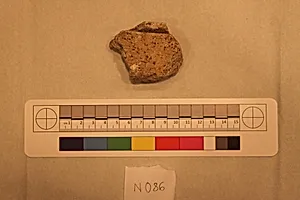
Medium
Stucco; carved and painted
Dimensions
H. 1 15/16 in. (5 cm) W. 1 9/16 in. (4 cm) D. 1 in. (2.5 cm)
Classification
Stucco
Department
Islamic Art
Museum
Metropolitan Museum of Art, New York, NY
Credit
Rogers Fund, 1948
Accession Number
48.101.388
Rights
Public Domain
Art Historical Context
This delicate stucco fragment, dating to the 8th–12th century, offers a glimpse into the refined world of early Islamic architecture. Likely originating from a mosque, palace, or monumental structure in regions like Iran, Iraq, or—key centers of Abbasid and Fatimid innovation—such fragments adorned walls and arches with intricate patterns. Stucco, a versatile plaster-like material made from gypsum, lime, and aggregates, was prized for its moldability and affordability, allowing artisans to create lavish decorations on a grand scale without the expense of stone carving. Crafted through skilled carving techniques, this tiny piece (just under 2 inches tall) features relief designs that were once vividly painted, enhancing their visual impact under flickering lamplight. The combination of carving and polychromy exemplifies Islamic art's mastery of abstract ornamentation—geometric motifs, arabesques, or floral elements—rooted in aniconic traditions that emphasized mathematical harmony and spiritual symbolism over human figures. Though incomplete, it reveals the era's technical prowess and aesthetic sophistication. Today, housed in the Metropolitan Museum of Art's Islamic Art department (acquired via the Rogers Fund in 1948), this fragment invites visitors to appreciate the enduring legacy of medieval Islamic craftsmanship, where even small survivals whisper tales of opulent lost worlds.