
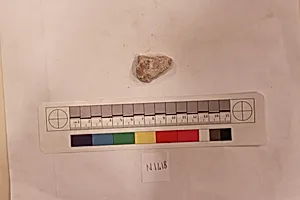
Stucco Fragment
Unknown Artist
probably 8th–12th century
Medium
Stucco (mortar); carved, painted
Dimensions
L3.5 x W 2.5x H 1.5
Classification
Stucco
Department
Islamic Art
Museum
Metropolitan Museum of Art, New York, NY
Credit
Rogers Fund, 1948
Accession Number
48.101.1720
Rights
Public Domain
Art Historical Context
This delicate stucco fragment, likely from the 8th–12th, offers a tantalizing glimpse into the ornate world of early Islamic architecture. Crafted from mortar-based stucco—a versatile material prized for its moldability and durability—the piece was meticulously carved and painted, showcasing techniques common in regions like Iraq, Iran, Egypt during the Abbasid or Fatimid eras. Measuring just 3.5 x 2.5 x 1.5 inches, it probably once adorned a mosque, palace, or madrasa, forming part of intricate friezes, niches, or mihrabs. Stucco's rise in Islamic art stemmed from its affordability and ability to mimic more precious stone carvings, allowing artisans to create deeply undercut reliefs with flowing arabesques, geometric motifs, or floral designs. The added paint would have heightened its vibrancy, catching light to enhance sacred or palatial spaces while adhering to Islamic principles favoring non-figural decoration. Though the exact design is unrecorded here, such fragments highlight the era's masterful blend of craftsmanship and spirituality. Acquired through the Rogers Fund in 1948, this artifact at the Metropolitan Museum of Art underscores the enduring legacy of Islamic decorative arts, inviting us to imagine the grandeur of lost monuments.