
Stucco Fragment
Unknown Artist
probably 8th–12th century
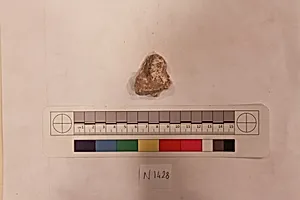
Medium
Stucco (mortar); carved, painted
Dimensions
L3.5 x W3 x H 1.5
Classification
Stucco
Department
Islamic Art
Museum
Metropolitan Museum of Art, New York, NY
Credit
Rogers Fund, 1948
Accession Number
48.101.1730
Rights
Public Domain
Art Historical Context
This delicate stucco fragment, likely from the 8th–12th century, offers a glimpse into the splendor of early Islamic architecture. Housed in the Metropolitan Museum of Art's Islamic Art department, it measures a modest 3.5 x 3 x 1.5 inches and was acquired through the Rogers Fund in 1948. Crafted from mortar-based stucco, it was intricately carved and painted, that allowed artisans to create affordable yet lavish decorations for mosques, palaces, and across regions like Iran, Iraq and Central Asia. Stucco became a hallmark of Islamic art during this period, serving as a versatile medium for ornate reliefs when stone was scarce. Artisans molded and carved it into complex patterns—often geometric, arabesque, or vegetal motifs—then applied vibrant paints to enhance depth and color. This fragment exemplifies the era's mastery of surface decoration, where abstraction and rhythm evoked spiritual harmony without relying on human or animal figures, aligning with Islamic aniconic traditions. Though small and anonymous, such fragments preserve the cultural vibrancy of medieval Islamic societies, where architecture was a canvas for mathematical precision and aesthetic beauty. Pause to imagine it adorning a grand mihrab or archway, whispering tales of a thriving artistic heritage.