
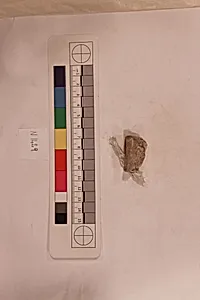
Stucco Fragment
Unknown Artist
probably 8th–12th century
Medium
Stucco; carved, painted
Dimensions
L3 x W 2x H 2.5
Classification
Stucco
Department
Islamic Art
Museum
Metropolitan Museum of Art, New York, NY
Credit
Rogers Fund, 1948
Accession Number
48.101.1731
Rights
Public Domain
Art Historical Context
This delicate stucco fragment, likely from the 8th to 12th century, a glimpse into the refined architectural decoration of the Islamic world during the Abbasid or early Fatimid periods. Hailing from the Metropolitan Museum of Art's Islamic Art department, it exemplifies the era's masterful use of stucco in mosques, palaces, and tombs across regions like Iraq, Iran, or Egypt. Acquired through the Rogers Fund in 8, such fragments preserve the ephemeral beauty of structures long vanished, highlighting the cultural splendor of medieval Islamic societies. Crafted from molded, carved, and painted stucco—a versatile, plaster-like medium—this small piece (3 x 2 x 2.5 inches) showcases techniques that allowed artisans to create intricate low-relief designs. Stucco's pliability enabled detailed vegetal motifs, geometric patterns, or Kufic inscriptions, often enlivened with vibrant pigments that have faded over time. These elements served both aesthetic and spiritual purposes, adorning mihrabs (prayer niches) or wall panels to evoke paradise gardens. Though its exact provenance remains unknown, the fragment underscores stucco's pivotal role in Islamic art, bridging sculpture and architecture. It invites visitors to appreciate the ingenuity of anonymous craftsmen whose work influenced later traditions, from Persian to Andalusian styles. A testament to enduring elegance in miniature form.