
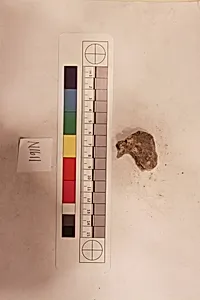
Stucco Fragment
Unknown Artist
probably 8th–12th century
Medium
Stucco; carved, painted
Dimensions
L 4 x W 3 x H 1
Classification
Stucco
Department
Islamic Art
Museum
Metropolitan Museum of Art, New York, NY
Credit
Rogers Fund, 1948
Accession Number
48.101.1913
Rights
Public Domain
Art Historical Context
Nestled in the Islamic Art galleries of the Metropolitan Museum of, this delicate *Stucco Fragment* offers a glimpse into the refined artistry of the medieval Islamic world, likely crafted between the 8th and 12th centuries. Measuring just 4 x 3 1 inches, this small survivor was once part of a larger architectural—perhaps adorning the walls of a mosque, palace, or madrasa in regions like Iraq, Iran, Central Asia, where stucco flourished as an accessible alternative to scarce stone. Carved with intricate patterns and enhanced by traces of paint, the fragment showcases masterful techniques typical of early Islamic decorative arts. Artisans molded wet stucco into molds or carved it freehand to create raised motifs—often geometric interlacing, floral arabesques, or Kufic script—that evoked the infinite beauty of paradise gardens described in the Quran. The addition of vibrant pigments brought these designs to life, reflecting a cultural emphasis on aniconism (avoiding human or animal figures) and harmony through repetition and rhythm. Acquired through the Rogers Fund in 1948, this unassuming piece highlights the ingenuity of anonymous craftsmen whose work influenced architecture from Spain to India. Pause here to appreciate how such fragments preserve the splendor of a golden age, inviting us to imagine the grand structures they once graced.