
Stucco Fragment
Unknown Artist
probably 8th–12th century
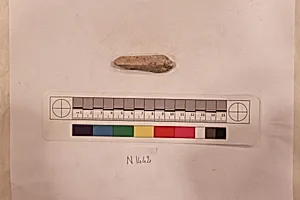
Medium
Stucco; carved
Dimensions
L 5.5 x W 1.5 x H 1.5
Classification
Stucco
Department
Islamic Art
Museum
Metropolitan Museum of Art, New York, NY
Credit
Rogers Fund, 1948
Accession Number
48.101.1744
Rights
Public Domain
Art Historical Context
This delicate stucco fragment, likely carved between the 8th and 12th centuries, a glimpse into the refined architectural artistry of the early Islamic world. Housed in the Metropolitan Museum of Art's Islamic Art department, it measures just 5.5 inches long, suggesting it was once part of a larger decorative ensemble adorning mosques, palaces, or madrasas across regions like Iran, Iraq, or Central Asia during the Abbasid or Seljuk eras. Stucco, a molded and carved plaster made from gypsum or lime, was prized in Islamic architecture for its and affordability. Artisans skillfully subtracted material to create intricate patterns—often geometric, floral, or arabesque motifs—that evoked the infinite beauty of paradise gardens described in the Quran. This technique allowed for lavish surface decoration without the expense of stone carving, democratizing opulence in sacred and secular spaces. Though incomplete, the fragment embodies the cultural zenith of Islamic ornamental arts, where abstraction and rhythm fostered spiritual contemplation. Acquired through the Rogers Fund in 1948, it invites visitors to ponder the anonymous mastery behind enduring traditions of beauty and precision.