
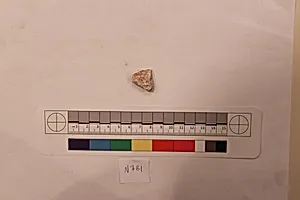
Stucco Fragment
Unknown Artist
probably 8th–12th century
Medium
Stucco; carved
Dimensions
H. 13/16 in. (2 cm) W. 13/16 in. (2 cm) D. 3/8 in. (1 cm)
Classification
Stucco
Department
Islamic Art
Museum
Metropolitan Museum of Art, New York, NY
Credit
Rogers Fund, 1948
Accession Number
48.101.1083
Rights
Public Domain
Art Historical Context
This delicate stucco fragment, carved by an unknown artist around the 8th–12th century, offers a glimpse into the refined artistry of early Islamic architecture. Measuring just 13/16 inches square and 3/8 inch deep, it is a surviving remnant likely from a larger decorative ensemble in a mosque, palace, or. Stucco, a versatile plaster-like material made from gypsum or lime, was prized in the Islamic world for its workability, allowing artisans to create intricate low-relief carvings that adorned walls, arches, and niches. During this formative period of Islamic art—spanning the Abbasid Caliphate and regional dynasties like the Samanids and Seljuks—stucco served as an affordable yet elegant medium for geometric patterns, floral motifs, and calligraphy. Its carvings often evoked paradise gardens or divine script, blending technical precision with spiritual symbolism. Though tiny, this fragment exemplifies the meticulous craftsmanship that transformed humble surfaces into shimmering displays of cultural sophistication. Housed in the Metropolitan Museum of Art's Islamic Art Department, acquired through the Rogers Fund in 1948, it invites us to ponder the hands that shaped it amid bustling medieval workshops, preserving echoes of a vibrant era.