
Stucco Fragment
Unknown Artist
probably 8th–12th century
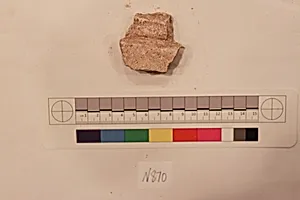
Medium
Stucco; carved, painted
Dimensions
H. 1 15/16 in. (5 cm) W. 1 15/16 in. (5 cm) D. 13/16 in. (2 cm)
Classification
Stucco
Department
Islamic Art
Museum
Metropolitan Museum of Art, New York, NY
Credit
Rogers Fund, 1948
Accession Number
48.101.1172
Rights
Public Domain
Art Historical Context
This delicate stucco fragment, dating to the 8th–12th century, offers a glimpse into the refined decorative arts of the Islamic world. Measuring just under 2 inches square, it likely originated from a larger architectural element, such as a wall panel, frieze, or niche in a mosque or palace. Crafted from stucco—a molded plaster made from gypsum, lime, and water—this medium was prized for its versatility, allowing artisans to create intricate low-relief carvings that mim more expensive stonework while being lightweight and easy to apply. The fragment's carved surface, enhanced with traces of paint, exemplifies early Islamic techniques where motifs like vegetal patterns or geometric designs were incised and then vividly colored to catch the light. During this golden age of Islamic architecture—from the Abbasid era in Iraq to the Fatimid period in North Africa and Egypt—stucco adorned sacred and secular spaces, symbolizing paradise gardens and divine order. Though the exact provenance remains unknown, its survival speaks to the enduring craftsmanship of anonymous masters whose work blended artistry with spiritual purpose. Today, housed in the Metropolitan Museum of Art's Islamic Art Department (acquired via the Rogers Fund in 1948), this tiny treasure invites us to imagine the grandeur of lost monuments, reminding visitors of how everyday materials could achieve timeless beauty.