
Stud
Unknown Artist
ca. 9th century BCE
Medium
Copper, bronze
Dimensions
Diam. 2.4 cm x D. 0.9 cm
Classification
Metalwork-Ornaments
Culture & Period
Iran · Iron Age II, Hasanlu Period IV
Department
Ancient Near Eastern Art
Museum
Metropolitan Museum of Art, New York, NY
Credit
Purchase, Mrs. Constantine Sidamon-Eristoff Gift, 1961
Accession Number
61.100.130e
Rights
Public Domain
Art Historical Context
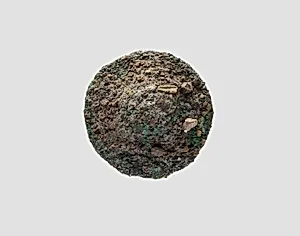
This delicate bronze stud, crafted around the 9th century in ancient Iran during the Iron Age (Hasanlu Period IV exemplifies the exquisite metalworking skills of the region's ancient artisans. Measuring just 2.4 cm in diameter and 09 cm deep, this small ornament—likely used to adorn clothing, harnesses, or furniture—strates precision craftsmanship with copper and bronze, alloys that highlight early mastery of smelting and casting techniques in the Ancient Near East. Unearthed from the Hasanlu archaeological site, a thriving settlement in northwestern Iran, the stud reflects the cultural vibrancy of a period marked by trade, warfare, and artistic innovation. Hasanlu's destruction around this time preserved such treasures, offering glimpses into elite life amid shifting powers before the rise of empires like the Achaemenids. Bronze ornaments like this one symbolized status and wealth, often featuring in burials or hoards. Today, housed in the Metropolitan Museum of Art's Department of Ancient Near Eastern Art (Purchase, Mrs. Constantine Sidamon-Eristoff Gift, 1961), this unassuming stud invites us to marvel at the enduring legacy of Iron Age Iranian metalworkers, whose techniques influenced centuries of jewelry and decorative arts.