
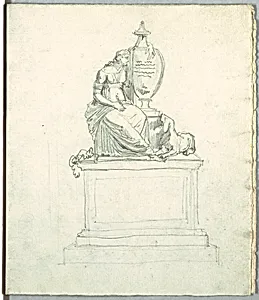
Study after a Funeral Monument and Study after Frieze
early 19th century
Classification
figures
Department
Smithsonian Collection
Museum
Smithsonian American Art Museum
Credit
Museum purchase through gift of various donors and from Eleanor G. Hewitt Fund
Accession Number
1938-88-3043
Rights
Public Domain
About this artwork
Research in Progress
Art Historical Context
Felice Giani, a Italian artist of the Neoclassical period (1758–1823), created this intriguing double study in the early 19th. Titled *Study after a Funeral Monument Study after Frieze*, features detailed figures drawn from classical sources—a funeral monument and an architectural frieze—highlighting Giani's deep fascination with antiquity. As a draftsman and painter who worked in Rome, Bologna, and Paris, G often emulated ancient Roman and Greek art, blending precise observation with elegant line work to revive classical ideals during the Napoleonic era's cultural revival. These studies exemplify the academic tradition of copying ancient masterpieces, a cornerstone of artistic training that allowed painters like Giani to master anatomy, composition, and narrative drama. Though the medium remains unidentified, the classification as "figures" underscores their focus on human forms in solemn, ceremonial contexts, evoking themes of mortality and heroism from Greco-Roman tombs and temples. Now part of the Smithsonian American Art Museum's collection—acquired through generous donors and the Eleanor G. Hewitt Fund—this work offers a window into Neoclassicism's enduring influence on Western art. Ongoing research promises to reveal more about Giani's techniques and inspirations, inviting visitors to ponder how past glories shaped modern creativity.