
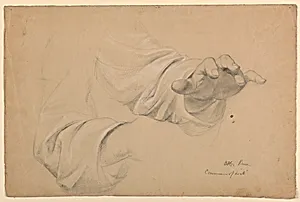
Study for "Communion of the Sick"
Classification
figures
Department
Smithsonian Collection
Museum
Smithsonian American Art Museum
Credit
Bequest of Erskine Hewitt
Accession Number
1942-50-49
Rights
Public Domain
About this artwork
Research in Progress
Art Historical Context
Daniel Huntington (1816–1906), a leading American painter of the 19th century, crafted this *Study for "Communion of the Sick"* between 1844 and 1845, during his formative years abroad in Europe. Born in New York and trained at the National Academy of Design, Huntington traveled to Italy around 1842, immersing himself in Renaissance masterpieces. This preparatory work, classified as a figure study, likely captures the solemn ritual of administering last rites or communion to the ill—a poignant religious theme reflecting mid-19th-century interests in spirituality and human vulnerability. As a sketch for a larger painting, it reveals Huntington's meticulous approach to composition, emphasizing expressive figures central to his neoclassical style. Influenced by masters like Raphael, he blended idealism with emotional depth, bridging European academic traditions with emerging American art. Though the medium remains unidentified amid ongoing research, such studies were vital for refining poses and narratives in history paintings. Bequeathed by collector Erskine Hewitt and housed in the Smithsonian American Art Museum, this piece highlights Huntington's early promise—he later became president of the National Academy. It invites visitors to ponder faith's quiet intimacy amid life's fragility, a timeless motif in American visual culture.