
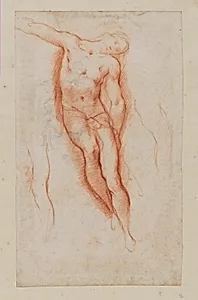
Study for the Figure of Christ in a Deposition
late 16th–early 17th century
Medium
Red chalk, over traces of an illegible sketch in black chalk.
Dimensions
10 5/8 x 6 1/2 in. (27 x 16.5 cm)
Classification
Drawings
Department
Robert Lehman Collection
Museum
Metropolitan Museum of Art, New York, NY
Credit
Robert Lehman Collection, 1975
Accession Number
1975.1.269
Rights
Public Domain
Tags
Art Historical Context
Ventura Salimbeni, a Sienese artist active during the late Renaissance and early Baroque periods (late 16th–early 17th century), created this delicate *Study for the Figure of in a Deposition*. As a preparatory drawing, it captures the limp, poignant form of Christ being lowered from the cross—a dramatic biblical scene central to Counter-Reformation art, emphasizing human suffering and divine pathos to inspire devotion. Rendered in red chalk over faint traces of black chalk on a modest 10 5/8 x 6 1/2 in. sheet, the work showcases Salimbeni's mastery of the male nude. Red chalk, prized for its warm tones and subtle gradations, allowed artists like him to model anatomy with fluid, lifelike contours, bridging Mannerist elegance and emerging Baroque naturalism. This technique highlights Christ's idealized yet vulnerable musculature, a nod to classical influences while serving religious narrative. Housed in the Metropolitan Museum of Art's Robert Lehman Collection since 1975, this drawing offers a rare glimpse into an artist's studio process. It reveals how such studies refined compositions for altarpieces or frescoes, blending technical precision with emotional depth to engage the faithful. A testament to Italian draftsmanship's golden age, it invites visitors to appreciate the quiet artistry behind grand sacred works.
About the Artist
Ventura Salimbeni · 1568–1613
Comment on works: Religious