
The Almighty with Angels
ca. 1650–69
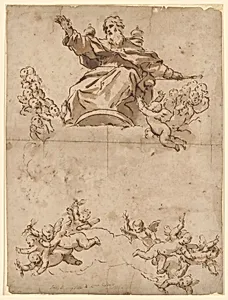
Medium
Pen and brown ink, brown wash, over black chalk sketch.
Dimensions
18 3/8 x 13 3/4 in. (46.7 x 34.9 cm)
Classification
Drawings
Department
Robert Lehman Collection
Museum
Metropolitan Museum of Art, New York, NY
Credit
Robert Lehman Collection, 1975
Accession Number
1975.1.331
Rights
Public Domain
Tags
Art Historical Context
Behold *The Almighty with Angels*, a dynamic preparatory drawing by the prolific Neapolitan Baroque master Luca Giordano, created around 1650–69. This work captures God the Father enthroned a swirling host of angels, embodying the era's fervent religious devotion during the Counter-Reformation. Giordano, known for his swift and expressive style—earning him the nickname "Luca Presto" (Luca it quickly)—produced countless sketches like this one, blending dramatic movement with spiritual grandeur. Executed in pen and brown ink with brown wash over a black chalk underdrawing, the piece exemplifies 17th-century draftsmanship techniques. The fluid lines and tonal washes create depth and luminosity, allowing Giordano to explore composition and light effects before committing to larger paintings or frescoes. At 18 3/8 x 13 3/4 inches, its intimate scale invites close inspection of the artist's virtuoso touch. Housed in the Robert Lehman Collection at The Metropolitan Museum of Art since 1975, this drawing offers a window into Giordano's workshop practices and the Baroque emphasis on divine majesty, reminding us how such studies fueled the opulent religious art that adorned Europe's churches.
About the Artist
Luca Giordano · 1634–1705
Luca Giordano (1634–1705) was an Italian painter of the late Baroque period who was one of the most prolific and versatile artists of the seventeenth century, earning the nickname "Luca fa presto" ("Luca works fast") for his extraordinary speed of execution. Born in Naples, he studied under José de Ribera and traveled extensively in Italy, absorbing influences from the Venetian colorists, Pietro d...