
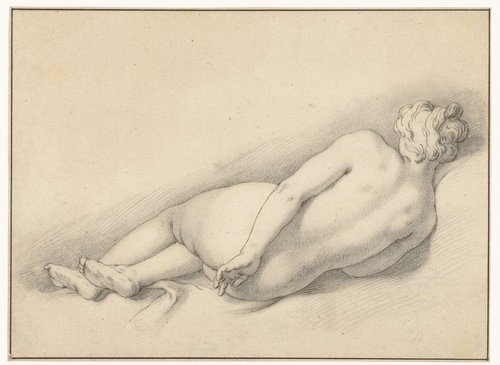
Study of a Reclining Female Nude
c. 1645 - c. 1651
Medium
pen
Dimensions
198; 146
Rights
Public Domain
About this artwork
height 146 mm x width 198 mm
Art Historical Context
Abraham Bloemaert's *Study of a Recl Female Nude* (c. 1645–1651) captures the artist's late-career mastery during the Dutch Golden Age. leading figure in Utrecht's Caravaggisti circle, Bloemaert (1566–1651) blended Mannerist elegance with Caravaggio's dramatic realism, influencing generations of Dutch artists. This intimate pen drawing, measuring just 146 mm high by 198 mm wide, exemplifies his skill in preparatory studies, essential for refining compositions in paintings of mythological or biblical scenes where the nude form symbolized beauty, vulnerability, and divine creation. Executed in pen—likely black ink on paper—the work highlights Bloemaert's precise line work and economical shading to model the figure's contours, musculature, and soft curves. Such studies were vital in an era before formal academies, allowing artists to dissect anatomy from life models amid growing interest in humanism and naturalism. The reclining pose evokes classical Venus motifs, bridging Renaissance ideals with 17th-century Baroque vitality. This modest yet profound sketch offers a window into Bloemaert's studio practice, underscoring the nude's enduring role in European art as both technical exercise and celebration of the human body. A gem for drawing enthusiasts, it reveals how everyday sketches fueled the grandeur of Golden Age masterpieces.
About the Artist
Abraham Bloemaert · 1566–1651
Abraham Bloemaert (1566–1651) was born in Gorinchem in the Dutch Republic, the son of architect Cornelis Bloemaert, and grew up in Utrecht after the family relocated there in 1575. His early artistic formation took him to Paris for three years in the early 1580s, where he studied with several masters before returning to the Northern Netherlands to pursue his career. He settled permanently in Utrec...