
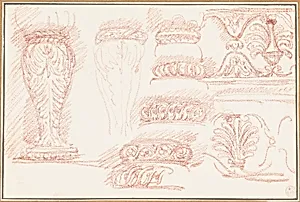
Study of balusters and sculptural motifs
Medium
ornament
Classification
ornament
Department
Smithsonian Collection
Museum
Smithsonian American Art Museum
Credit
Gift of Noah Butkin
Accession Number
1977-110-1-3
Rights
Public Domain
About this artwork
Research in Progress
Art Historical Context
In the late 1750s to 1770s, French artist Jean-Robert Ango captured the intricate beauty of Roman architectural details his *Study of bal and sculptural motifs*. in Rome during this vibrant period—a hub for European on the Grand Tour—o documented classical-inspired elements balusters (elegant, vase-like supports for railings) sculptural motifs. These preparatory drawings reflect the era's fascination with antiquity, blending French Rococo finesse with emerging Neoclassical precision as designers revived ancient forms for modern palaces and gardens. As an ornamental study, this work exemplifies the meticulous draftsmanship essential to 18th-century architecture and decoration. Ango's precise lines likely served as a model for sculptors, stonemasons, or engravers, disseminating decorative ideas across Europe. Housed in the Smithsonian American Art Museum's Smithsonian Collection (gift of Noah Butkin), it highlights the cross-cultural exchange between France and Italy, underscoring how such studies preserved and innovated upon Rome's Baroque legacy. Though research continues, this piece invites us to appreciate the artistry in everyday architectural ornament—those subtle flourishes that elevate space into splendor.