
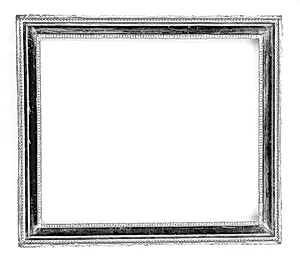
Cassetta frame
Unknown Artist
ca. 1820 (Directoire style)
Medium
Gilt oak, composition ornament, black varnish.
Dimensions
Overall: 21 × 24 in. (53.3 × 61 cm) Sight: 16 15/16 × 20 in. (43.1 × 50.8 cm) Rabbet: 18 × 21 in. (45.7 × 53.3 cm)
Classification
Frames
Culture
French
Department
Robert Lehman Collection
Museum
Metropolitan Museum of Art, New York, NY
Credit
Robert Lehman Collection, 1975
Accession Number
1975.1.2546
Rights
Public Domain
Art Historical Context
This elegant Cassetta frame, created around 1820 in the Directoire style, exemplifies the refined neoclassical taste that emerged in France following the Revolution. Characterized by clean lines and subtle ornament, the frame reflects the period’s admiration for ancient Greek and Roman aesthetics, favoring restraint over the elaborate flourishes of earlier eras. As a French work in the Robert Lehman Collection at The Metropolitan Museum of Art, it serves as both a protective border and an integral decorative element, enhancing the presentation of the artwork it once enclosed. Crafted from gilt oak with composition ornament and finished in black varnish, the frame demonstrates sophisticated techniques of the time. The gilding lends a warm luminosity, while the molded composition allows for delicate, repeatable motifs without the expense of hand-carving. The contrasting black varnish adds depth and sophistication, highlighting the frame’s architectural structure. Such frames were essential in early nineteenth-century interiors, where they helped unify a room’s decorative scheme. Today, this piece offers visitors insight into the artistry of framing itself—an often-overlooked craft that elevated paintings within aristocratic and bourgeois homes.