
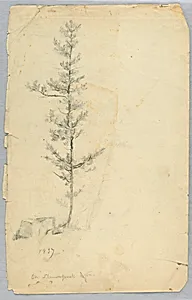
Study of Pine Tree, Shawangunk Mountains
Medium
nature studies
Classification
nature studies
Department
Smithsonian Collection
Museum
Smithsonian American Art Museum
Credit
Bequest of Erskine Hewitt
Accession Number
1942-50-25
Rights
Public Domain
About this artwork
Research in Progress
Art Historical Context
**Study of Pine Tree, Shawunk Mountains** * Huntington (American, 18161906), 1837* *Nature study; Smithsonian American Art Museum, Bequest of Ersk Hewitt* Created when Daniel Huntington was just years old, this *Study of Pine Tree,angunk Mountains* captures rugged beauty of New York's Shawangunk Mountains, a scenic range in the Hudson Valley region prized by early American artists. As one of Huntington's earliest known works, it reflects his youthful training in observing nature directly from life—a foundational practice for aspiring painters in the 1830s, amid the rise of American landscape art inspired by Romanticism. Huntington, who later became a prominent portraitist and National Academician, began his career sketching outdoors, honing skills that influenced his more finished compositions. This nature study, likely a pencil or charcoal sketch, exemplifies the meticulous detail artists used to record textures like the pine's needles and bark, essential for evoking the American wilderness. The Shawangunks' dramatic cliffs and forests symbolized national pride and exploration during a time of westward expansion. Housed in the Smithsonian American Art Museum's Smithsonian Collection, this piece offers a glimpse into Huntington's formative years and the meticulous groundwork of 19th-century American art. Though research continues, it stands as a testament to the quiet intensity of artistic discovery in nature. (198 words)