
Study with Brigands (Lower Section)
ca. 1633
Medium
Etching; only state
Dimensions
sheet: 1 9/16 x 3 1/16 in. (4 x 7.7 cm)
Classification
Prints
Department
Drawings and Prints
Museum
Metropolitan Museum of Art, New York, NY
Credit
Rogers Fund, 1922
Accession Number
22.73.5
Rights
Public Domain
Tags
Art Historical Context
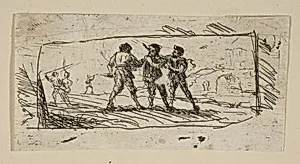
Claude Lorrain, masterful French Baroque artist born Claude Gellée (1600–1682), created *Study with Brigands ( Section)* around 1633, during his formative years in Rome. Renowned for his poetic landscapes bathed in golden light, Lorrain here turns to etching—a precise intaglio technique where acid bites into a metal plate to form intricate lines. This rare, single-state impression, measuring just 1 9/16 x 3 1/16 inches, captures a compact scene of rugged men, likely brigands, evoking the earthy, dramatic figures that often populated his idyllic vistas. As one of Lorrain's early print experiments, this work showcases his skill in rendering texture and movement through delicate hatching and cross-hatching, hallmarks of 17th-century printmaking. Produced amid the artistic ferment of the Eternal City, where Lorrain absorbed influences from classical antiquity and contemporaries like Domenichino, it reflects Baroque interests in narrative tension and human drama. The "lower section" suggests it may derive from a larger compositional study, hinting at his meticulous preparatory process for oil paintings. Acquired by The Metropolitan Museum of Art via the Rogers Fund in 1922, this tiny gem offers visitors a window into Lorrain's versatility beyond grand canvases. Its scarcity as the only state underscores its value, inviting close inspection of how light and shadow define these shadowy figures against implied wilderness. A testament to etching's intimacy, it bridges Lorrain's luminous seascapes with the raw vitality of everyday life.
About the Artist
Claude Lorrain (Claude Gellée) · 1604–1682
Claude Gellée was born around 1600 in the village of Chamagne in the Duchy of Lorraine, from which he would take the professional name by which history knows him: Claude Lorrain. Orphaned young, he traveled south to Rome as a teenager, eventually finding his way into the Naples workshop of Goffredo Wals before apprenticing with the Roman landscapist and fresco painter Agostino Tassi around 1622. F...